Stripchat India User Reviews
Stripchat reviews can help an Indian reader identify questions worth asking about payments, privacy and support. They are less useful when a star rating or an angry headline replaces the details of what happened. A useful account connects a particular action, its conditions and the outcome the reviewer experienced.
Location matters too. A global review feed is not an India customer survey, and a country label on a profile does not by itself verify the location or payment method of a particular transaction. International feedback can raise useful questions without establishing how often the same problem occurs for users in India.
The sensible approach is to keep three things separate: what a reviewer says happened, what the product’s published conditions say, and what the available records actually show. Agreement between them can strengthen an explanation; a gap calls for a question rather than an invented conclusion.
Two published examples and their limits
The Trustpilot profile for fr.stripchat.com contains international feedback. It is a profile for that domain, not a verified sample of Indian customers. The following examples illustrate how to read the claims in context.
A post under Leander, with a BR profile label, describes an incident on 8 October 2026 in which the author says a ticket-show purchase reduced the token balance without providing access. The author also says later support replies did not address the access question adequately. This is a reported billing and support experience; the post alone does not establish the underlying technical cause or the final account records.
For an Indian reader, the useful follow-up is specific: could a disputed access charge be matched to a session record and investigated separately from a complaint about a performer’s conduct? That question is more actionable than treating one post as proof that every token purchase fails.
In a 23 April 2026 review, Christian R, with a DE profile label, praises the interface and responsiveness of support while criticising moderation consistency. The mixed account matters: its positive and negative observations should be considered together. Its claimed response experience is not a service-wide response-time guarantee.
Neither example should be relabelled as an Indian testimonial. Their value is in the questions they raise about access records, case handling and interface expectations. They do not support an India satisfaction score, a complaint rate or a claim that every reviewer had the same experience.
What makes a review relevant to India?
Look for the part of the experience that could affect your own use: currency, payment method, processor, browser, device and the conditions of the purchased service. A price complaint in another currency may reflect a different package, exchange rate or fee arrangement.
A statement that a payment method worked elsewhere does not establish that it is offered to every account in India. Similarly, an author’s description of their bank or provider should not be transferred to all UPI or card purchases. The India payment-method guide explains why actual checkout availability matters.
Dates are also important. An old review may describe an earlier interface or policy, while a recent post may describe an older incident. Keep the date of the event distinct from the date of publication or an edited review.
A language preference can be relevant without proving nationality. A Hindi message, an Indian-sounding username or an INR amount alone is not enough to establish every detail about the person or transaction. Read what the review actually identifies rather than filling in the missing background.
Billing complaints need more than a balance screenshot
A statement such as “I paid but did not receive tokens” raises a genuine question, but several records may be involved: the payment attempt, its provider status, a credit in Token History and any subsequent spending. An account’s current balance does not, on its own, explain that sequence.
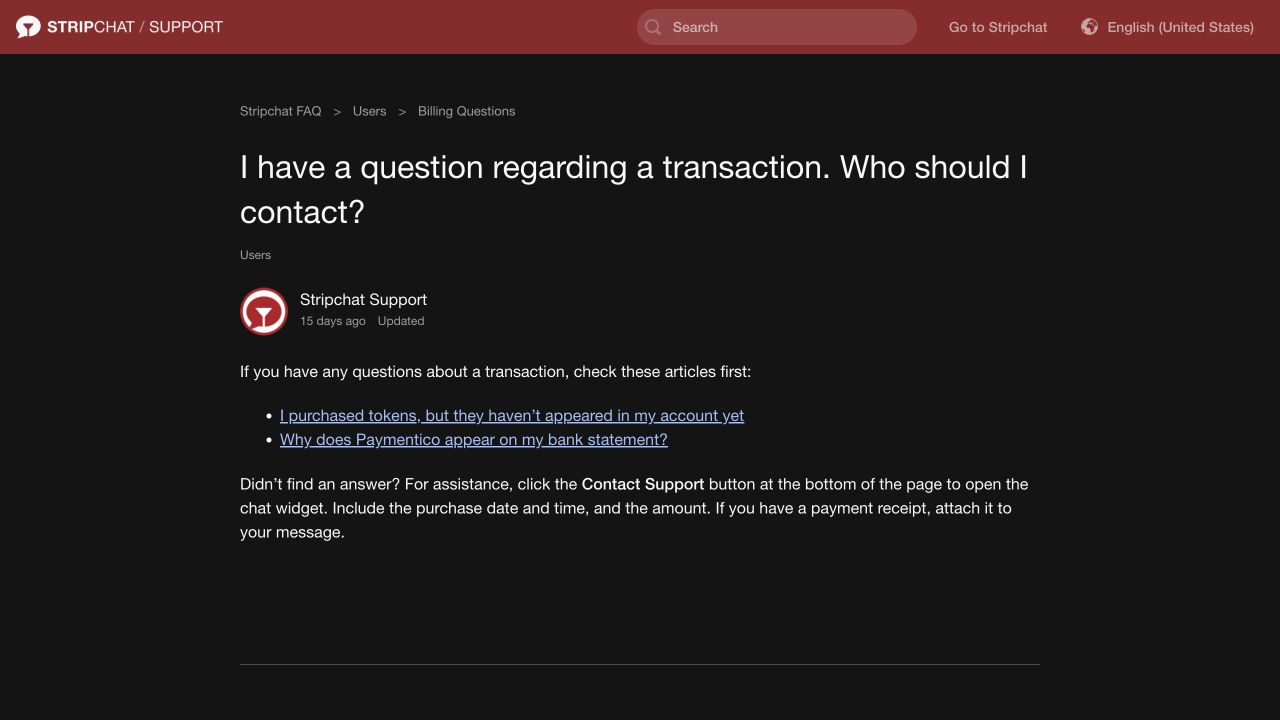
Stripchat’s transaction-support instructions ask for the purchase date, time and amount, with a receipt if available. Those details help connect a complaint to a particular purchase rather than to a general impression of the account.
Check whether the author distinguishes a pending debit, a completed charge, a missing credit and a dispute about a paid interaction. Those are different complaints and may need different evidence. A refund request should also be distinguished from approval and from money reaching the payment account.
Our missing-token guide explains the record comparison, while the refund-policy guide covers the product conditions. A review can describe dissatisfaction with an outcome without proving that a different refund condition applied to the purchase.
Reading privacy and account complaints carefully
“Not private” can describe several concerns: a visible notification, a public profile, a payment descriptor, a conversation or retention of account data. Before applying that verdict to your own situation, identify the particular exposure the author describes.
Ask whether the record concerns the website, a shared device, an email account, a bank or a payment provider. A privacy setting on one service does not necessarily control records held somewhere else. The privacy guide and bank-statement guide cover those distinctions.
Account restrictions need similar care. A room ban, disabled messaging, a payment-verification requirement and a platform suspension do not mean the same thing. A review that names the restriction and the decision received is more informative than a general statement that access disappeared.
The suspension and appeal guide explains the relevant questions. Reading the applicable rule does not settle a particular dispute, but it helps identify which facts would matter to a review of the decision.
Support feedback: speed and usefulness are different
A fast acknowledgement can be helpful without answering the actual question. A useful review should make clear whether the reply came from an automated flow or a person, what the request concerned and whether the response addressed it.
“Support answered quickly” and “the problem was resolved” are different observations. Likewise, a reply refusing a request may still explain the applicable condition, while a friendly reply may leave the substantive issue unanswered. Consider the content and outcome alongside the time taken.
Keep platform support, the payment processor and the bank separate. A reviewer may have contacted one while expecting an action only another could confirm. That does not automatically invalidate the complaint; it identifies a handoff worth clarifying.
Our customer-support guide covers the official route. The Hindi-support guide explains the difference between language options in a bot and assistance with a particular case.
Spotting weak or potentially manipulated feedback
The FTC’s guidance on evaluating online reviews recommends considering several sources, recency and reviewer history. It warns that a burst of reviews can be a reason for scrutiny, that fake reviews can be negative as well as positive, and that appearances alone may not reveal whether a review is genuine.
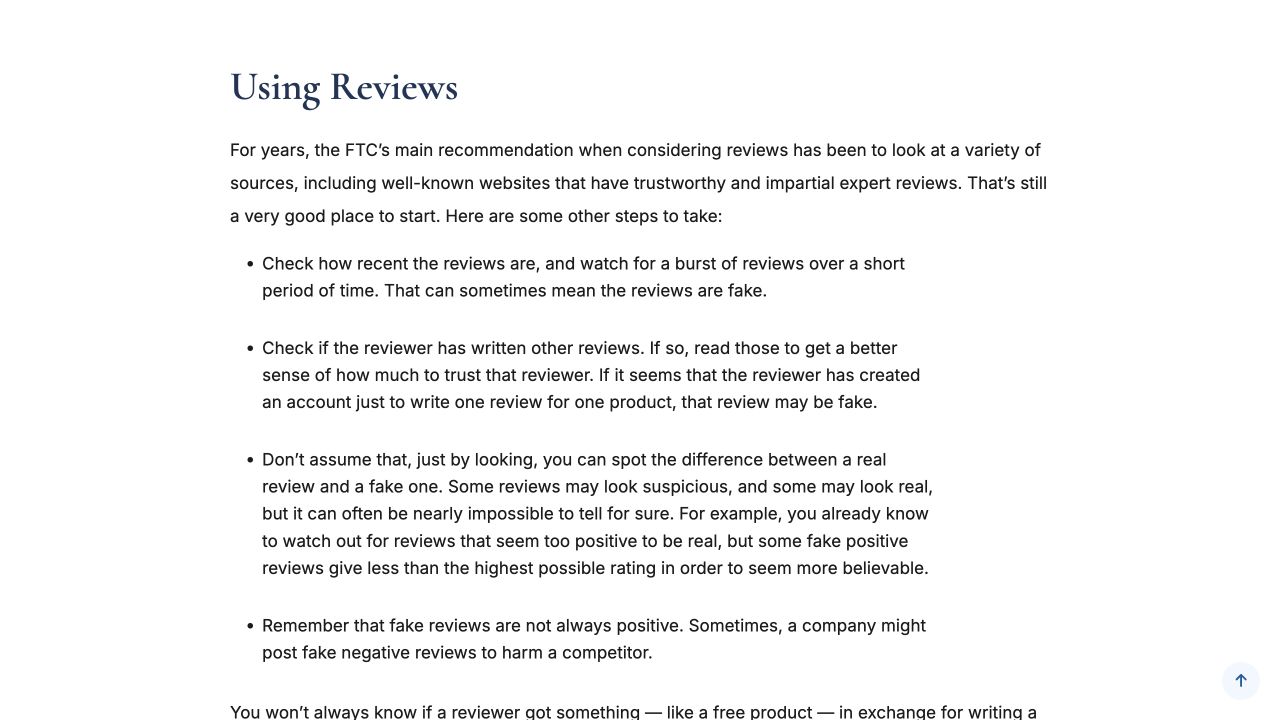
Use those signals as prompts to investigate, not as a verdict on a person. A new profile can belong to someone writing about a real first experience. A long-standing profile can still omit important context. Detailed writing is useful, but detail alone does not authenticate a transaction.
Check whether a review page explains its commercial relationships, invitations or incentives. A promotional link does not automatically make every statement false, but it can affect what you should verify independently. Apply the same scrutiny to glowing recommendations and hostile posts.
Be cautious with a complaint that turns into an offer to recover money through a personal contact. A recovery promise is a separate claim, even when it appears below a plausible story. The scams guide explains why an upfront fee or request for account secrets deserves independent checking.
A practical checklist for comparing reviews
| Review detail | What it helps you assess |
|---|---|
| Event date | Whether the experience concerns the current service or an older situation. |
| Exact action | Whether the issue was a purchase, paid access, account restriction or another task. |
| Payment method | Whether the experience is relevant to the route you might actually use. |
| Records | Whether the claim is connected to receipts, account entries or a decision. |
| Support outcome | Whether the case was acknowledged, explained, resolved or remains disputed. |
| Source context | Which domain is reviewed, who publishes the page and whether incentives are disclosed. |
Use the checklist to compare like with like. A complaint about a particular paid interaction should not be counted as a missing token purchase. A positive browsing review should not be used to establish the quality of refund handling.
Repeated, specific accounts can justify closer investigation, but they still do not supply a denominator. Without knowing how experiences were collected and how many people used the service, a review feed cannot tell you the percentage of purchases that encounter a problem.
If you want to describe your own experience
Keep a private record first: what you tried, what was displayed, what was charged or credited, and what support said. Separate direct observations from your interpretation of the cause.
A factual structure is enough: “I attempted this action at this time; the account showed this result; I contacted this support route; this was the response or current status.” Explain any later resolution so the account does not leave readers with an outdated outcome.
Do not post full card details, identity documents, private contact information, passwords or authentication codes as public proof. Retain originals privately and use clearly redacted copies where appropriate. Report the underlying issue through the genuine process rather than relying on a public post to reach the right team.
For a payment you do not recognise, contact the bank or provider promptly and describe accurately what you authorised. For harassment, use the reporting guide. Public feedback and an account-specific complaint serve different purposes.
Frequently asked questions
Does a global rating describe Indian users specifically?
No. Check the domain, review population and available location information. An international profile should not be presented as an India customer survey.
Does a detailed negative review prove misconduct?
It can identify a serious question without settling it. Look at the event, records, relevant conditions and any response, keeping the author’s claim distinct from an established finding.
Should positive reviews be ignored?
No. Apply the same questions about scope, context and evidence. Praise for navigation or a helpful reply can be useful without proving that every purchase or support case will go the same way.
Can one review predict a refund or response time?
One person’s outcome is not a guarantee for another case. Identify the applicable conditions and contact route for the transaction or account issue concerned.
Does an India label authenticate the purchase?
A location label alone does not verify the transaction details or their relevance to your account. The payment method, date, provider and supporting records still matter.