Unauthorised Stripchat Charges
If you believe a Stripchat-related payment was made without your permission, contact your bank or payment provider promptly through its trusted app, website or card contact details. Report the transaction and ask how to secure the affected payment method. You can investigate the merchant record in parallel; there is no need to wait for a platform support reply before reporting suspected misuse.
An unfamiliar charge is not always an unauthorised charge. Stripchat documents payment-provider names that may appear instead of the website name, and a repeated purchase may relate to a previously enabled payment feature. Those possibilities are worth checking, but neither a familiar descriptor nor an existing account proves that you authorised a particular payment.
The useful approach is to protect the payment method, preserve the transaction details and establish what actually happened. This guide explains the records to compare, the questions to ask and the difference between a bank dispute, a refund request and stopping future payments.
Report suspected payment misuse promptly
Use the bank or provider’s genuine reporting channel. Describe the charge as it appears, say why you do not recognise or did not authorise it, and give the date, amount, currency and reference available to you. Ask what action is needed to prevent further misuse and how to register the transaction complaint.
The Reserve Bank of India’s guidance on unauthorised electronic banking transactions emphasises reporting to the bank at the earliest opportunity. Keep the acknowledgement and complaint reference, including when you reported the issue. An early report and a clear record matter more than waiting to prepare a perfect explanation.
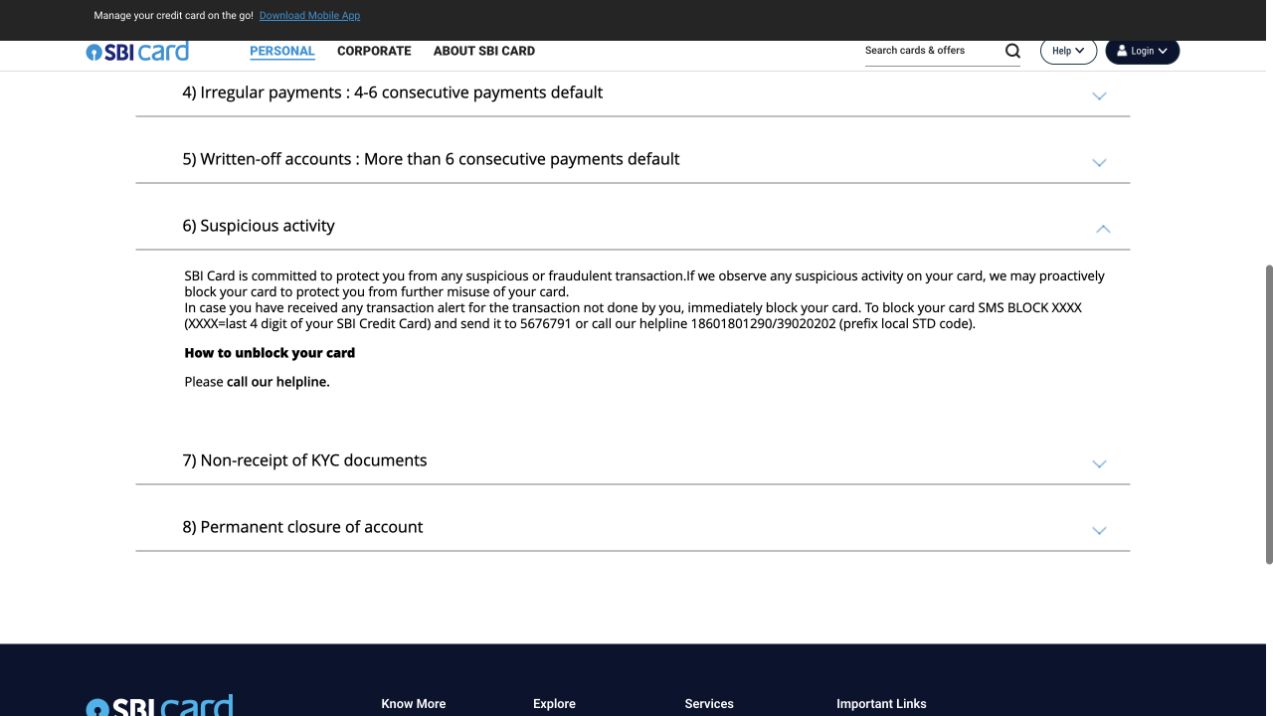
As an issuer example, SBI Card’s suspicious-activity guidance tells its customers to block their card immediately if they receive an alert for a transaction they did not make. Follow your own issuer’s trusted process for the affected card, including its instructions about blocking or replacement.
Securing a payment method and disputing a past charge are separate tasks. Confirm that the bank has recorded both the protection action and the transaction report where applicable. Ask what happens next, what evidence is needed and how you can follow the case.
If the payment was through a wallet or another provider, report it through that service’s genuine process as well as contacting the bank where relevant. Use the method shown by the actual transaction rather than assuming every Stripchat-related entry is a card payment.
Check the billing name without assuming what it proves
Stripchat’s statement-name guide lists possible descriptors including EPOCH.COM*Technius, SegpayEU.com-TechChat and Paymentico.com, with centrobill.com and Technius Ltd also named. The descriptor depends on the payment provider.
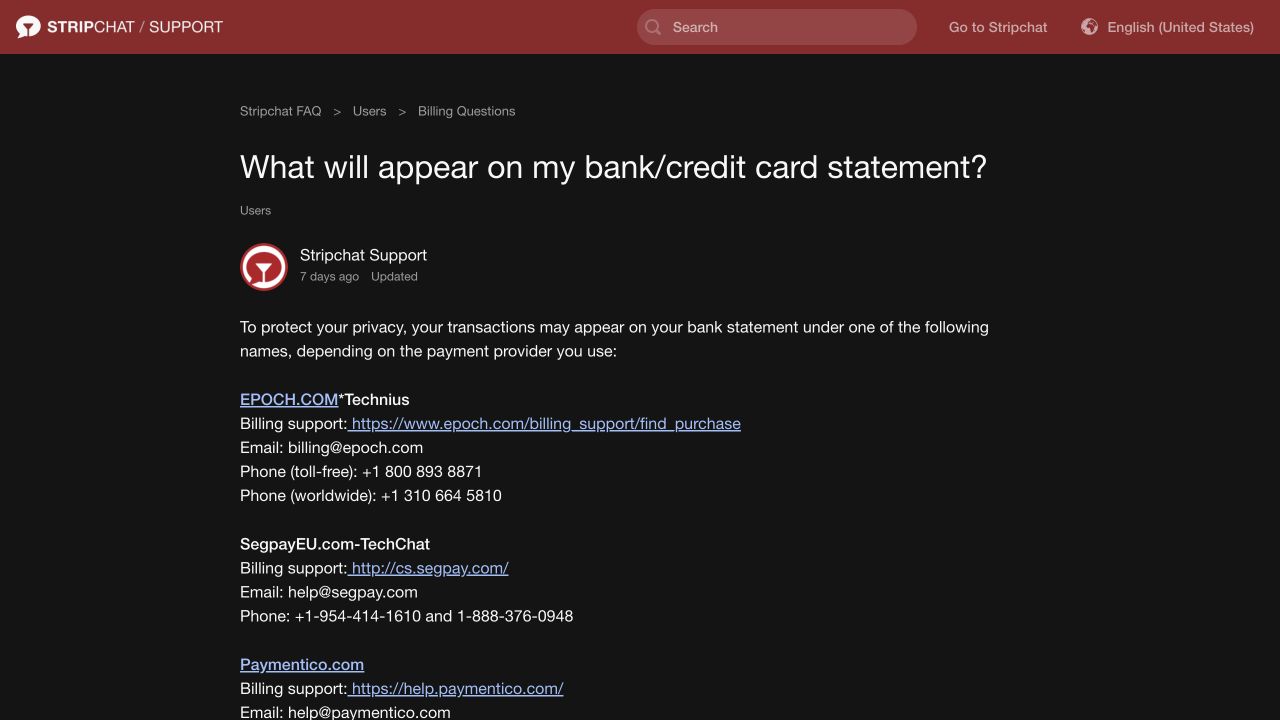
Compare the entry with a receipt, payment confirmation and any account purchase record you can access. Use the amount, original currency, date and transaction reference together. A name match alone is too little to establish which purchase the entry represents.
If you have never used Stripchat, explain that to the bank and billing provider. A processor name by itself is not enough to attribute a charge to a particular Stripchat account. You do not need to guess a username or open a new website account simply to describe the bank transaction.
Our bank-statement guide covers the listed names and the differences between purchase dates, posting dates and INR amounts. Use that comparison alongside your report; do not let a prolonged search for a receipt delay reporting suspected unauthorised use.
Separate an unknown payment from other billing problems
A precise description helps the recipient investigate the right issue. Keep these situations distinct even if they all first appeared as an unexpected bank entry.
| Situation | What needs to be established |
|---|---|
| You did not make or authorise the payment | Report suspected misuse and identify the transaction through the bank or provider. |
| You remember a purchase but the descriptor is unfamiliar | Match the receipt with the amount, currency, date and provider reference. |
| Two entries appear for one purchase | Ask whether they are separate completed debits or different stages of one transaction. |
| A payment repeats after an earlier purchase | Check the authorisation, account settings and receipts for that specific charge. |
| You paid but tokens are missing | Reconcile payment status with Token History. |
| You authorised the purchase but want it returned | Use the applicable refund or service-complaint process. |
A token balance does not answer every question in the table. Tokens may have been purchased and spent, a payment may still be pending, or an account record may need investigation. Preserve the purchase history rather than relying only on the balance currently displayed.
For a completed purchase without its expected credit, see Stripchat tokens not received. For an authorised purchase you want returned, see the refund-policy guide. Neither situation should be relabelled as fraud simply to obtain a different outcome.
What to ask the bank or payment provider
Start with what you know and make uncertainty explicit. If you do not recognise the merchant name, say that. If you know the purchase was not authorised by you, say so and explain the relevant facts. A record of the exact charge is more helpful than an assumption about who caused it.
Useful questions include:
- What status does this entry have: pending, completed or another status the provider can explain?
- What merchant or processor information and reference identify it?
- How should I secure the affected payment method against further misuse?
- Has a transaction complaint been registered, and what is its reference?
- What documents, statements or other information are needed through the genuine reporting process?
- Which time limits and follow-up steps apply to this particular case?
If there are several unfamiliar entries, report each one and ask how they are recorded under the case. Keep the times, amounts and references separate. Equal amounts are not enough to conclude that two lines are the same transaction.
Ask for clarification if you receive a response about blocking the card but none about investigating the charge. Equally, an acknowledgement that a dispute exists is not confirmation that every necessary protection action has been taken. Follow the issuer’s instructions for both.
Contact Stripchat or the billing provider in parallel
The bank can investigate the payment instrument and its own transaction record. The platform or processor can help identify the purchase and associated website activity. These enquiries can proceed together when the same charge needs tracing.
Use the provider links in Stripchat’s statement-name guide or the provider identified by your receipt. For platform questions, its transaction-support article directs users to Contact Support and asks for the purchase date, time and amount, with a receipt where available.
Explain that you are reporting a suspected unauthorised payment and whether you have already contacted the bank. Give the relevant reference and describe any unexpected account activity. If you do not have a receipt or website account, state that clearly and ask how the transaction can be identified from the payment record.
Keep bank and platform case references together. If one party issues a refund or gives a substantive explanation, pass that information to the other through the existing case. That helps the investigation reflect what has already happened to the transaction.
Avoid phone numbers in unsolicited messages, search adverts or comments offering guaranteed refunds. Start from the genuine bank app, the contact details on your card or the official support pages. A person knowing the merchant name does not establish that they represent the bank or processor.
What evidence should you preserve?
Save the relevant records you already have. You can report first and supply further information through the legitimate process; gathering evidence should not become a reason to postpone a suspected-misuse report.
Keep a copy of the transaction details showing the descriptor, amount, currency, date, status and reference. Retain the original purchase confirmation if one exists, any relevant bank alert, and the acknowledgement of your report. Note when you first noticed the entry and when you contacted each party.
If you have a Stripchat account, preserve relevant Token History, purchase confirmations, unfamiliar account changes and messages directly related to the incident. Record what you observed without claiming you know the cause. A suspicious login, a missing receipt and an unknown debit may be relevant, but they do not by themselves prove a particular data breach or identify another person.
Share only what the genuine recipient needs. An entire month’s statement can expose unrelated spending and balances. Redact unrelated information in attachments where appropriate, while following the bank’s secure requirements for the transaction it must investigate.
Never send a banking password, card PIN, CVV, one-time code or authenticator setup secret in a support conversation. Use the official secure interface for any information the bank or provider genuinely requires. Keep the original records privately so you can refer to them if a redacted copy needs clarification.
Protect the website account and registered email
If you use Stripchat and suspect unauthorised account access, secure that account as well as the payment method. Use a trusted device, protect the registered email account and change a reused or exposed password through the website’s own settings or recovery flow. Do the same for other accounts where you reused the affected password.
Stripchat’s two-factor authentication guide describes an authenticator-based control in Settings and Privacy. The guide says it requests an additional code when a suspicious login is detected. Enable the available protection through the genuine account interface and keep its setup information private.

This protects account access; it does not investigate a bank charge, reverse a payment or replace the bank report. A payment problem does not necessarily mean the website account was accessed, and a password change alone does not establish that the payment method is secure.
If you cannot sign in, use the official recovery and support routes. Do not give an intermediary your email login or authenticator code to recover the account for you. Our Stripchat safety guide for India covers account and device precautions in more detail.
Could repeated charges be Auto-Refill or another authorisation?
Stripchat’s Auto-Refill article describes repeating the last manually purchased token package using the last payment details on file when the balance runs low. It is available with some payment methods. Review the Balance Auto-Refill setting and the actual purchase records if you recognise the account but not a repeated charge.
A feature being available does not prove it caused the entry. Nor does an earlier authorised purchase establish that you authorised every later payment. Ask what authorisation and transaction record explain the specific charge in dispute.
If you want future automatic purchases to stop, review the relevant setting and request confirmation through the platform or provider where needed. Also ask the bank how any ongoing payment authority should be handled when securing the affected card or account.
Our guide to cancelling Stripchat recurring payments covers the separate Auto-Refill, Ultimate and Fan Club controls and the confirmations to keep.
Stopping future payments and resolving an earlier debit are different outcomes. Disabling Auto-Refill is not a refund decision, and a refund of one transaction does not establish that every future authority has been cancelled. Keep confirmation of each action you requested.
What if someone you know used the card?
Describe what happened accurately. Knowing the person involved, having shared a device and having authorised a particular purchase are different facts. Give the bank the relevant information about permission, access and the transaction rather than assuming a label resolves the issue.
Stripchat’s payment terms prohibit reporting a payment as fraudulent or unauthorised without a good-faith reason for that belief. That condition should not discourage a truthful report of suspected misuse. Explain what you know, what you did not authorise and what remains uncertain.
If you did authorise the purchase but later regretted it or were dissatisfied with the service, describe that as a refund or service complaint. It has its own conditions. Keep any genuine claim about account access or a separate unknown payment distinct from that disagreement.
Will the money be returned?
A suspected unauthorised transaction needs investigation under the rules applicable to the bank, payment method and circumstances. An unfamiliar name alone does not establish entitlement to a refund, and a familiar name does not establish that the transaction was authorised.
Ask the bank what decision is being made, what information it relies on and what the next step is. If a credit appears during the investigation, ask whether it is provisional or final. Keep any platform refund confirmation with the bank’s record so the same payment can be reconciled.
The unused-package and service-complaint windows in Stripchat’s refund policy do not describe every bank dispute deadline. Likewise, the payment-processing windows in a missing-token article are not instructions to wait before reporting suspected unauthorised use.
If the matter remains unresolved, use the bank or provider’s published grievance process and ask for a written explanation and the relevant case reference. Follow the stated escalation route for your account. A support acknowledgement, an investigation update and a final decision are different stages.
Frequently asked questions
I have never used Stripchat. Does the billing name prove someone did?
A payment-provider name alone does not identify a particular website purchase or account. Report the unfamiliar transaction to the bank or provider, give the exact record and explain that you have no corresponding purchase. The payment can then be traced without guessing who made it.
Should I wait for Stripchat support before contacting my bank?
No. If you suspect unauthorised payment use, report it promptly through the bank or provider’s trusted channel and ask how to secure the payment method. A platform or processor enquiry can continue in parallel.
Can a pending charge still be worth reporting?
Yes, if you did not authorise it or suspect misuse, tell the bank about the pending entry and ask what action applies. Its status affects how it is handled; it is not a reason to ignore a possible compromise.
Will changing my Stripchat password stop card fraud?
A website password change addresses account access. It does not replace reporting to the issuer or securing the payment method. Protect the registered email and use available account controls, while following the bank’s instructions separately.
Does the absence of an OTP guarantee a refund?
Do not infer the investigation outcome from that fact alone. Tell the bank what authentication you did or did not perform and ask it to review the transaction under the applicable process. Preserve any relevant messages or alerts.
Will deleting the account remove the charge?
Do not expect account deletion to remove the bank’s financial record or resolve a transaction complaint. Preserve the relevant purchase and support records, secure the account and follow the investigation through the bank and appropriate billing support.