Stripchat Scams
A message using the Stripchat name can look convincing without coming from the platform. It might promise cheap tokens, threaten to close your account or offer to recover a payment. The important question is what it asks you to do next: enter a password somewhere new, send money to an individual, install a file or reveal a code.
Treat an unexpected request as something to verify through a route you choose yourself. Open the genuine website or help centre, check the account information relevant to the claim and keep credentials out of ordinary conversations. A logo, a familiar username or a screenshot of a supposed support dashboard does not establish who is contacting you.
If money has already been lost, contact the bank or payment provider promptly while you secure the affected account. Do not wait for the sender to explain the situation or pay another fee to release a promised refund.
Patterns to recognise before you respond
Scam messages often turn a plausible problem into pressure to act somewhere else. The following patterns give you specific questions to ask, without assuming that every payment problem is fraud.
| The request | What to check before acting |
|---|---|
| “Support needs your login code” | Reach support through the genuine help centre; keep authentication secrets private. |
| “Generate free tokens after verification” | Confirm any offer through the service itself before entering data or installing anything. |
| “Send payment to this personal account” | Compare the request with the checkout you reached from your own account. |
| “Install this update to unlock access” | Check the platform’s official mobile-app guidance and your device’s genuine update route. |
| “Pay a fee to recover your money” | Stop and verify the claimed organisation independently. |
| “Pay or your information will be exposed” | Preserve the threat, stop sending money or material and report through appropriate channels. |
A deadline does not authenticate a request. If the sender will not let you check through the service independently, that is another reason to stop. You do not need to keep a conversation going to prove that you are a legitimate account holder.
Fake support and staff impersonation
Stripchat’s Community Guidelines prohibit pretending to be a staff member, malicious links and asking for payment methods outside those offered by the website. They also address misleading behaviour and attempts to drive users off the platform.
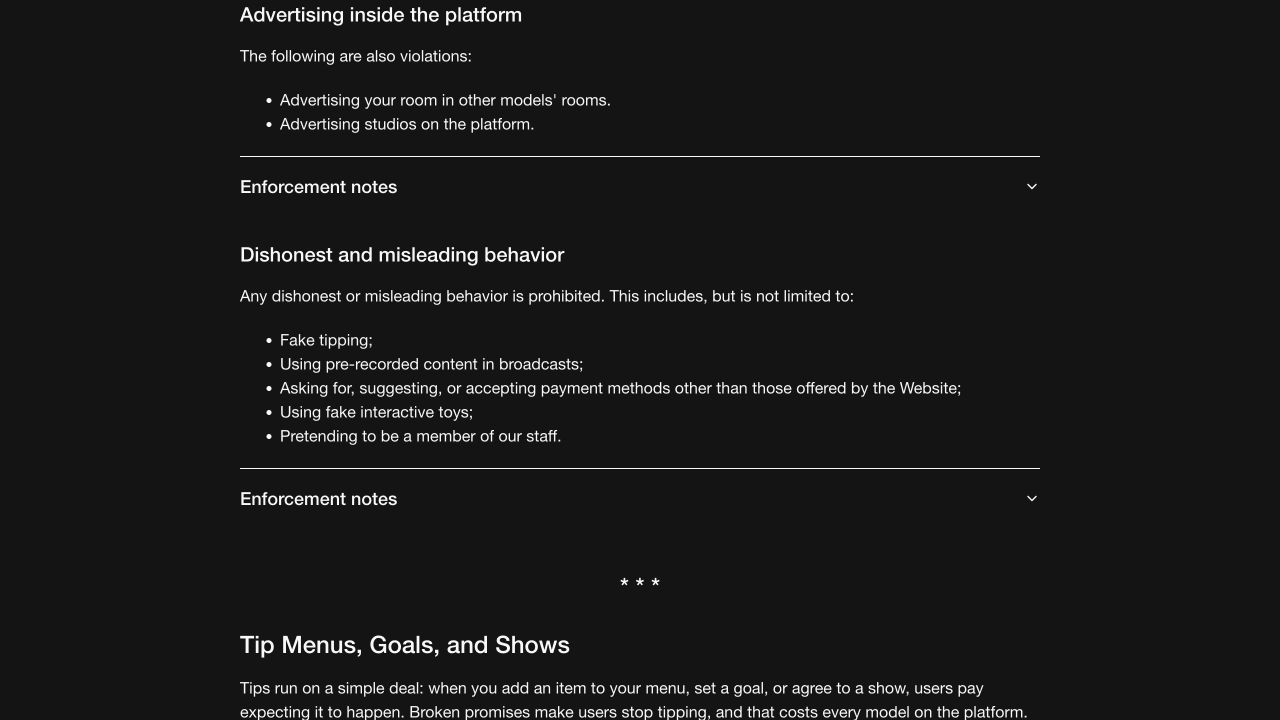
A person claiming to be support might refer to a real issue you mentioned publicly. That knowledge is not proof of staff access. Your username, a purchase complaint or an account question may give the person enough context to make an invented explanation sound personal.
Start a fresh visit to the genuine help centre rather than using a link or phone number supplied in the message. Describe the claim and ask whether the request belongs to a genuine case. If you have a case reference, use it as context, not as proof that every later message quoting it is authentic.
Keep passwords, authentication codes, reset links and authenticator setup keys out of the conversation. Do not share your screen while entering credentials or grant remote access simply because someone says it will speed up billing support. Explaining an error should not require handing another person control of your account.
Token generators and free-token promises
A page with a progress bar, a balance counter and a “human verification” step does not establish that tokens have been credited. It may ask for surveys, downloads, payment details or account access before showing another condition. Do not keep completing tasks because the page says the reward is almost ready.
Stripchat’s purchase guide describes choosing a package and payment method from the account’s purchase interface. Methods vary by country. A stranger’s generator page is not evidence of an alternative authorised crediting process.
Check any claimed promotion through the genuine service and read its conditions there. An offer can be assessed without sending a password to an outside page. A username-only request is not enough to establish safety either: it can be the first step toward a later request for more information.
If you want to know whether a balance changed, open your account independently and review the available account records. Do not rely on a screenshot sent by the promoter or a counter on their website. Our missing-token guide explains how to compare an actual purchase with Token History and payment status.
Be equally cautious with a seller offering unusually cheap tokens through a personal chat. Ask where the offer is documented and why the payment is being moved away from the normal account checkout. A trial payment is still money you can lose; it is not a reliable way to establish the seller’s legitimacy.
Payment links, UPI requests and refund claims
An external payment provider can be part of a genuine checkout. The useful distinction is how you reached it and what the account’s own purchase flow shows. A link in an unsolicited message should not be trusted merely because it leads to a page with a payment-provider logo.
Read the amount, currency, recipient and action shown by the genuine payment interface. Do not approve a debit or mandate because someone describes it as receiving money. NPCI’s UPI guidance explains that the UPI PIN authorises transactions and must not be shared.
For an Indian account, use the payment options actually offered at checkout. A message advertising a special local route does not prove availability or affiliation. The India payment-method guide explains why a method appearing in general documentation is different from it being offered to your account.
If the problem concerns a genuine payment, preserve the receipt and bank or provider status. A failed purchase, pending debit, duplicate charge and payment you did not authorise need different explanations. Do not send another payment to “synchronise” the first one just because a stranger claims it is necessary.
Recovery agents who ask for an advance fee
People who have already lost money can be targeted again by someone promising to recover it. The US Federal Trade Commission’s recovery-scam guidance warns about unexpected contacts offering recovery in exchange for an upfront fee or sensitive information.
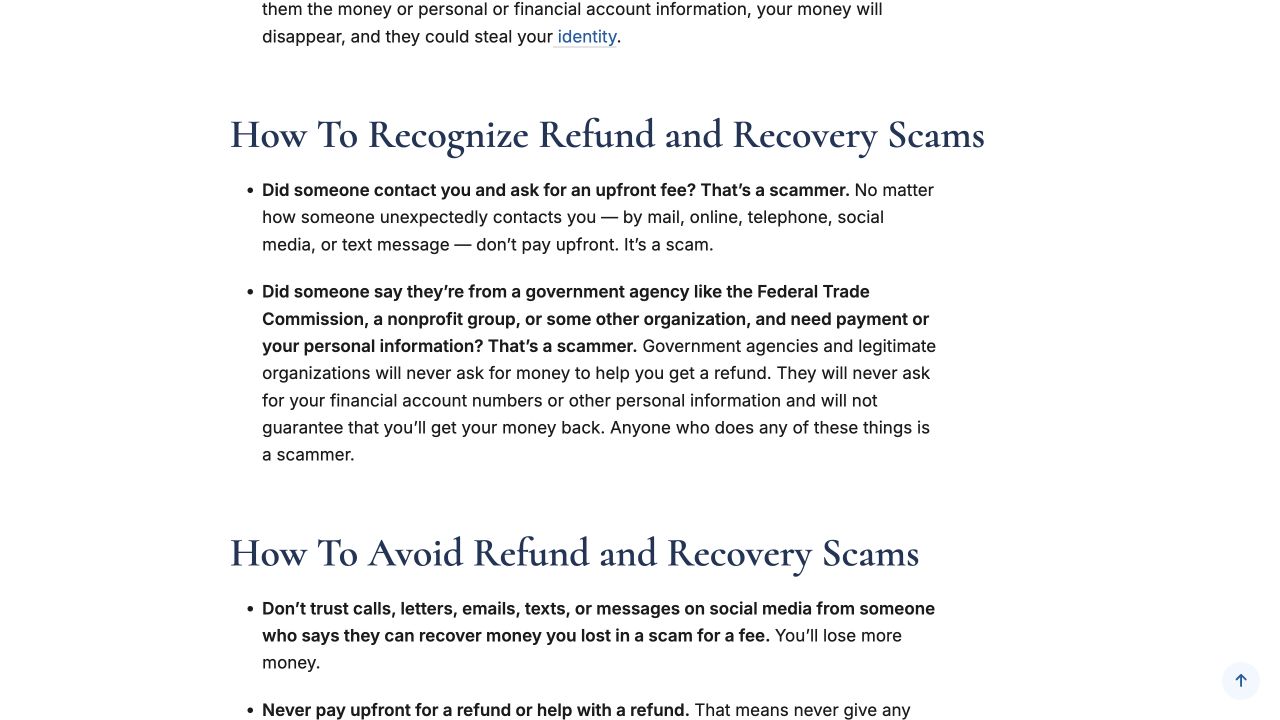
The sender may call the payment a release fee, processing charge or deposit. The label does not answer why an unknown person should receive more money before you can use a genuine complaint or refund process.
Do not send banking credentials, a gift-card code or cryptocurrency to an unsolicited recovery contact. Verify the organisation using contact information you find independently, and use your bank or provider’s actual dispute process. A promise of guaranteed reimbursement is not evidence that the person can deliver it.
A legitimate refund request about a Stripchat purchase has its own conditions. Our refund-policy guide explains the product rules without promising that every loss is refundable. Reporting a scam is also not a guarantee that a payment will be reversed.
Fake downloads and account-verification helpers
A message can combine a real account concern with a harmful download: install a player, run a token tool or add a security helper before support will continue. Do not treat the software as safe simply because the explanation mentions your account.
Stripchat’s mobile-app article describes a PWA for Android and iOS and says it does not distribute a standalone APK or app-store app. Compare a download claim with that guidance before opening a package.
Our app and APK safety guide covers source checks, Play Protect and sensitive permissions. If you already installed something, review the device concern separately from changing the website password. An app removal does not itself revoke an account session or replace an exposed secret.
Threats, blackmail and pressure to leave the site
A demand to pay in order to stop disclosure of personal information is a threat, whether or not the sender proves they hold everything they claim. Do not send more money, identity documents or private material in an attempt to satisfy an escalating demand. Payment does not establish that a copy has been deleted or that contact will end.
Preserve the message, account name, relevant links and payment instructions. Limit further contact and use the platform’s available blocking and reporting controls. If the threat creates a concern beyond the website, use the appropriate local police or cybercrime channel as well.
Avoid responding by publishing personal details about the suspected sender or circulating sensitive material as evidence. Keep original records privately and provide the relevant material through the genuine reporting process. Report what you can establish, including what was demanded and when, without turning a suspicion into an unsupported public accusation.
Report a suspicious message with useful evidence
Stripchat’s harassment-reporting guide describes Report Message through the public-chat message’s three-dot menu and a separate Report Content route. For harassment or threats, use the relevant instructions and give context for the review.
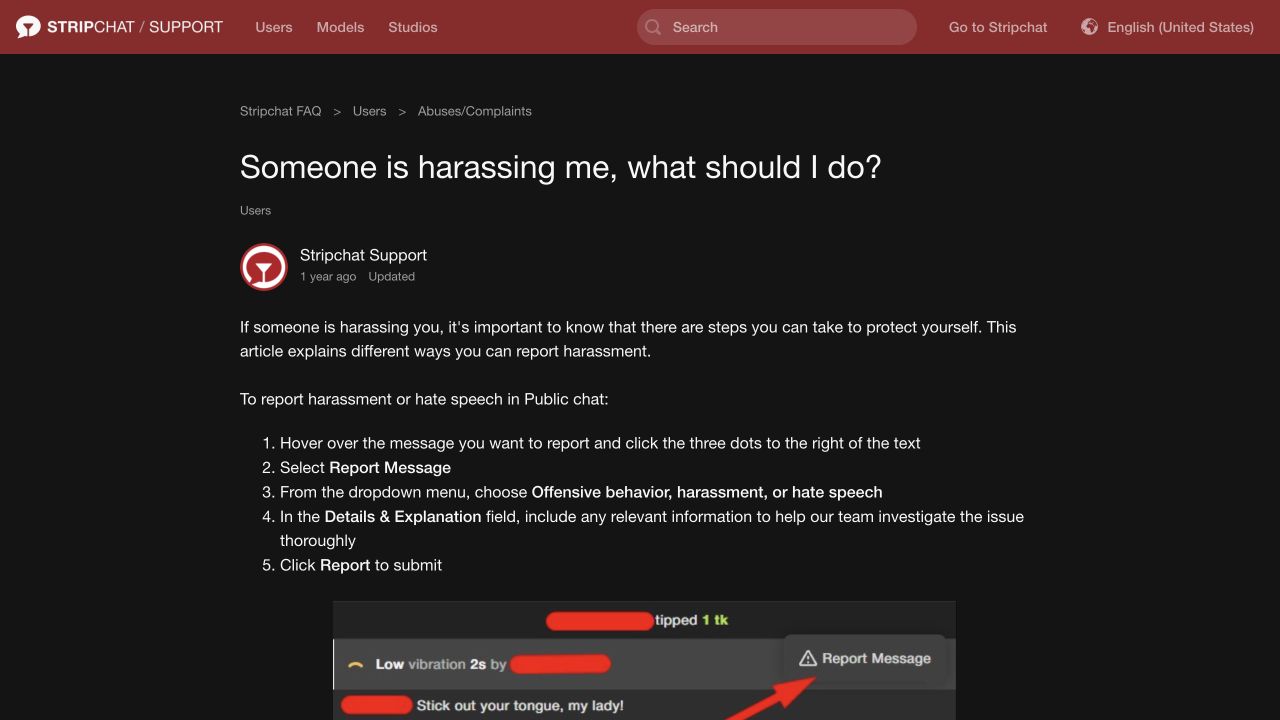
Our reporting and blocking guide explains message and profile reports, room controls and the evidence to keep.
Choose a reason that accurately describes the incident. A guide about harassment should not be taken to mean that every billing dispute belongs in that category. For fake support or a suspicious offer, use the applicable controls offered by the site or contact genuine support to explain the issue.
Keep a concise record of the username or profile link, message link where available, date and time, claimed role, requested action and any payment reference. Screenshots should show enough context to identify the claim. Preserve originals and redact unrelated financial or personal details from copies where appropriate.
Stripchat’s transaction-support instructions ask for the purchase date, time and amount, with a receipt if available. Explain whether you approved the payment and whether the recipient was part of a checkout or a person who contacted you.
If you have already shared information or paid
Act according to what happened rather than waiting until you have labelled the entire incident.
- Stop further payments and disclosures. Do not complete another verification task or pay a fee to release money.
- Secure affected accounts from a trusted device. Protect the recovery email and replace exposed or reused passwords through genuine settings or recovery.
- Review authentication and access. Ask about invalidating existing sessions if needed. Keep setup secrets and live codes out of support messages.
- Contact the bank or payment provider promptly. Describe the transaction honestly, including anything you approved after being misled.
- Preserve and report the evidence. Keep the relevant messages, receipts, account changes and case references.
Our account-security checklist covers passwords, 2FA and recovery planning. The unauthorised-charge guide covers payment reporting. If you knowingly approved a transfer after a deceptive claim, explain that fact; do not describe every scam loss as a payment made without your involvement.
An unexpected link alone does not prove that your account was accessed. Entering credentials, sharing an authentication code, installing software and approving a payment are different events. Tell support or the bank which of them actually occurred.
Reporting financial cyber fraud in India
The National Cyber Crime Reporting Portal lists 1930 for reporting online financial fraud. You can also use the official cybercrime portal for the appropriate reporting route. Reach these channels independently, alongside reporting the payment to the bank or provider.
Keep transaction references, dates, amounts, recipient details and the messages connected to the claim ready. Follow the official process for the information it requires. Do not send an identity file or bank record to someone in a chat who merely says they can register the complaint for you.
A report to Stripchat, a bank report and a cybercrime complaint serve different purposes. Keep their references separately and explain what you have already done. None should be presented as a guaranteed recovery service.
Frequently asked questions
How can I tell whether a support contact is real?
Open the genuine help centre yourself and verify the issue through its support route. Do not use a logo, sender name or case number alone as proof. Keep passwords and authentication secrets private.
Can a token-generator animation prove that tokens were added?
No. Check account records through a visit you initiate yourself. Do not complete downloads, surveys or payments just because a page displays a growing balance.
Does an unfamiliar charge always mean a scam?
No. Compare the receipt, payment status, descriptor and any recurring arrangement. Report a payment you did not authorise promptly, while keeping ordinary purchase problems distinct.
Should I pay a fee to someone promising a refund?
Do not pay an unsolicited recovery contact upfront. Use the genuine provider or platform process and verify any organisation independently. A guarantee in a message is not evidence that money can be recovered.
Will reporting the sender return my money?
A platform report asks for conduct to be reviewed. Payment recovery is a separate process with the bank, provider or relevant merchant. Preserve the records and report promptly, without assuming a guaranteed outcome.